Mollroy: A Sweet Script for Branding
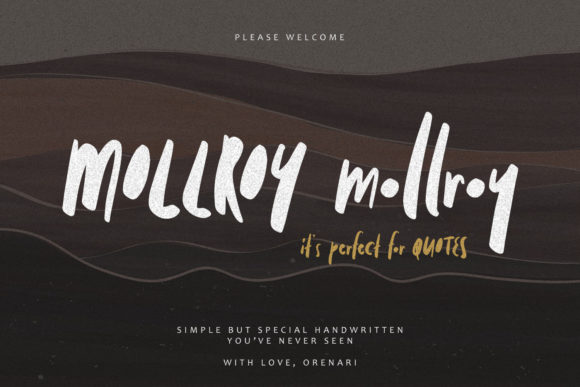
There’s something about a handwritten font that feels personal, almost like a secret shared between the designer and the viewer. When I first opened Mollroy, it was on a blank brand board for a small café project. The client wanted something warm, inviting, and a little bit whimsical. Mollroy fit perfectly—its round, soft letters felt like a friendly greeting, making it ideal for logos, quotes, and templates.
The font has a simple, elegant character. Each letter flows smoothly, with subtle curves that give it a gentle, approachable vibe. It’s not overly ornate, which makes it versatile for different design applications. Whether it’s on a business card or a packaging label, Mollroy adds a touch of personality without overwhelming the design.
Testing Mollroy in Real Design Projects
For the café project, I started by testing Mollroy on a logo draft. I paired it with a clean sans serif for balance, letting the script font take center stage for headlines and taglines. The result was a visual identity that felt cohesive yet expressive. It worked well for the café’s name, giving it a handmade quality that aligned with their brand values.
I also used Mollroy on mockups for packaging and signage. On a coffee bag, it added a sense of authenticity, while on a shop sign, it made the text feel more human. The font’s simplicity allowed it to stand out without being distracting, which is key for effective branding.
One thing I noticed was how Mollroy handled different sizes. In larger formats, like a homepage hero section or a poster, it retained its clarity and charm. But when used in smaller text, such as body copy, it became less readable. That’s why I recommend using it as a display or headline font rather than for long paragraphs.
Using Mollroy in Different Design Contexts
Mollroy shines in short-form text. It’s perfect for social media graphics, where bold, eye-catching text can make a strong impression. I’ve used it on Instagram posts and flyers, where its playful yet professional look helps grab attention without sacrificing style.
In editorial design, Mollroy can be an effective accent. Pairing it with a serif font for body text creates a nice contrast, allowing the script to highlight key phrases or headings. It also works well with modern typography styles, especially when the goal is to add a touch of warmth to a minimalist layout.
When designing for a skincare brand, I found that Mollroy added a sense of care and craftsmanship. It felt right for product labels and promotional materials, reinforcing the brand’s commitment to natural, thoughtful ingredients. The font’s softness complemented the brand’s aesthetic, making it a great choice for this kind of project.
Practical Tips for Working with Mollroy
Before committing to Mollroy in a full brand system, I always test it across different mediums. I check how it looks on print versus digital, and whether it scales well at various sizes. This helps ensure that it will perform consistently in all design applications.
Another tip is to explore the font’s features. Mollroy likely includes alternate characters, ligatures, and different weights, which can add depth to your design. Experimenting with these options can help you find the best way to use the font for your specific project.
Font pairing is also important. While Mollroy works well on its own, it often benefits from a complementary typeface. A serif font can provide structure, while a sans serif offers clarity. Handwritten fonts can create a layered effect, adding interest to your design without clashing.
Why Mollroy Stands Out
What makes Mollroy special is its ability to feel both modern and nostalgic. It’s not too casual, nor is it overly formal. This balance makes it suitable for a wide range of brands, from creative studios to local restaurants. Its versatility means it can adapt to different design needs without losing its unique character.
For designers looking for a premium font that brings a personal touch to their work, Mollroy is a solid choice. It’s easy to use, visually appealing, and ideal for projects that require a human element. Whether you’re working on a logo, packaging, or digital assets, Mollroy can elevate your design with its soft, rounded style.
As I continue to explore Mollroy in different contexts, I’m always impressed by how it enhances the visual storytelling of a brand. It’s a reminder that sometimes, the simplest fonts can have the biggest impact. Let your imagination run free—Mollroy is ready to bring your ideas to life.